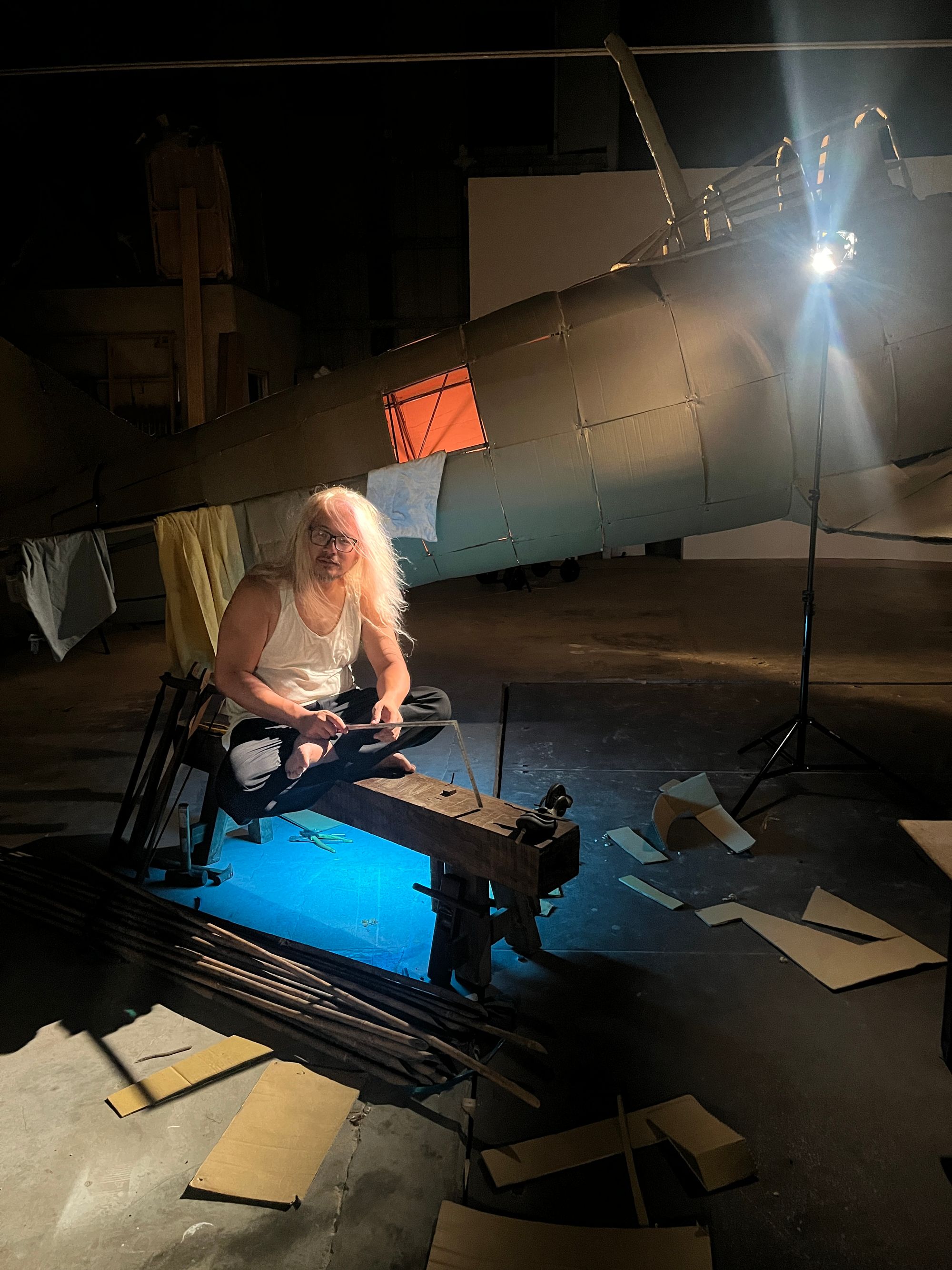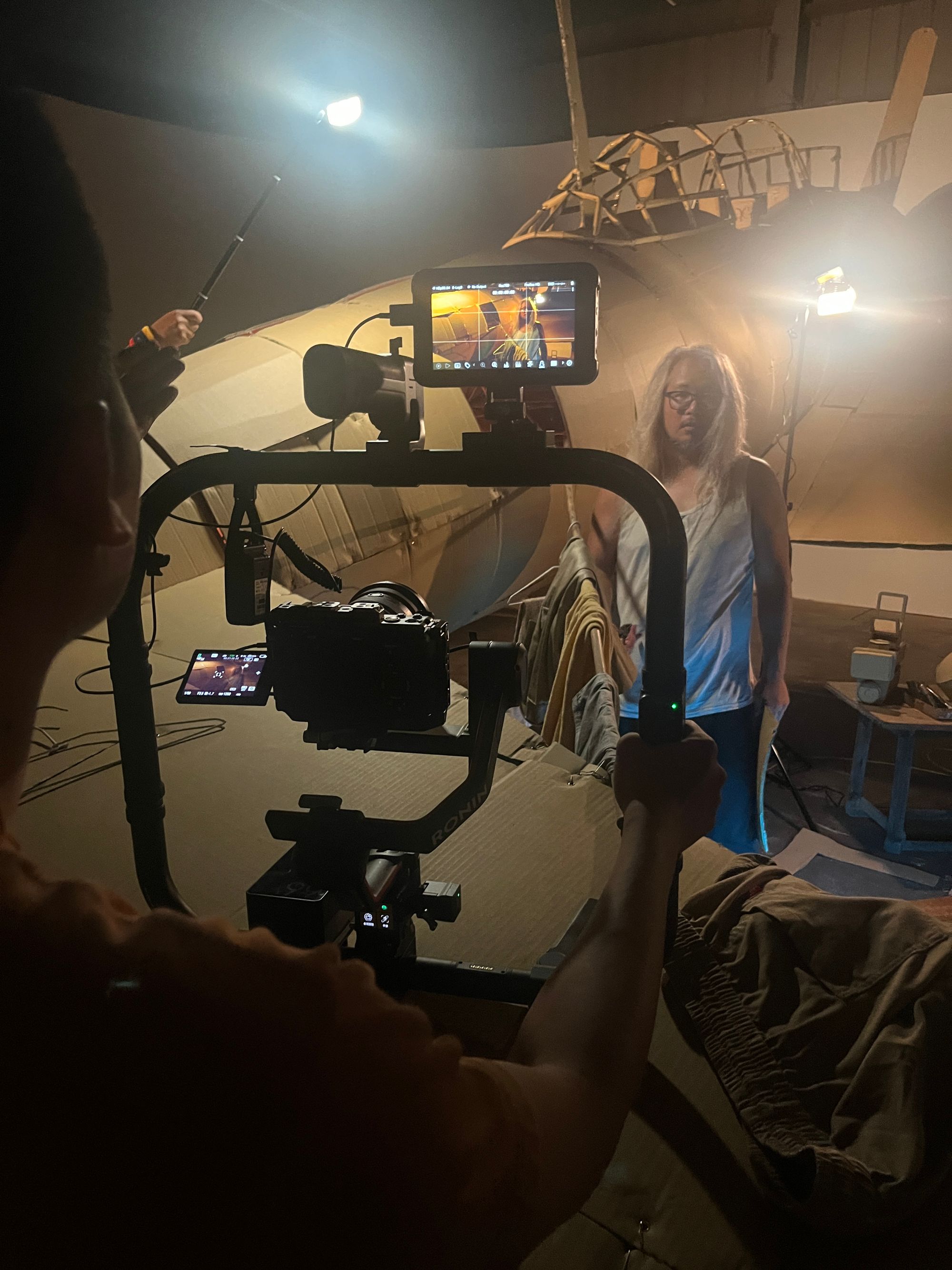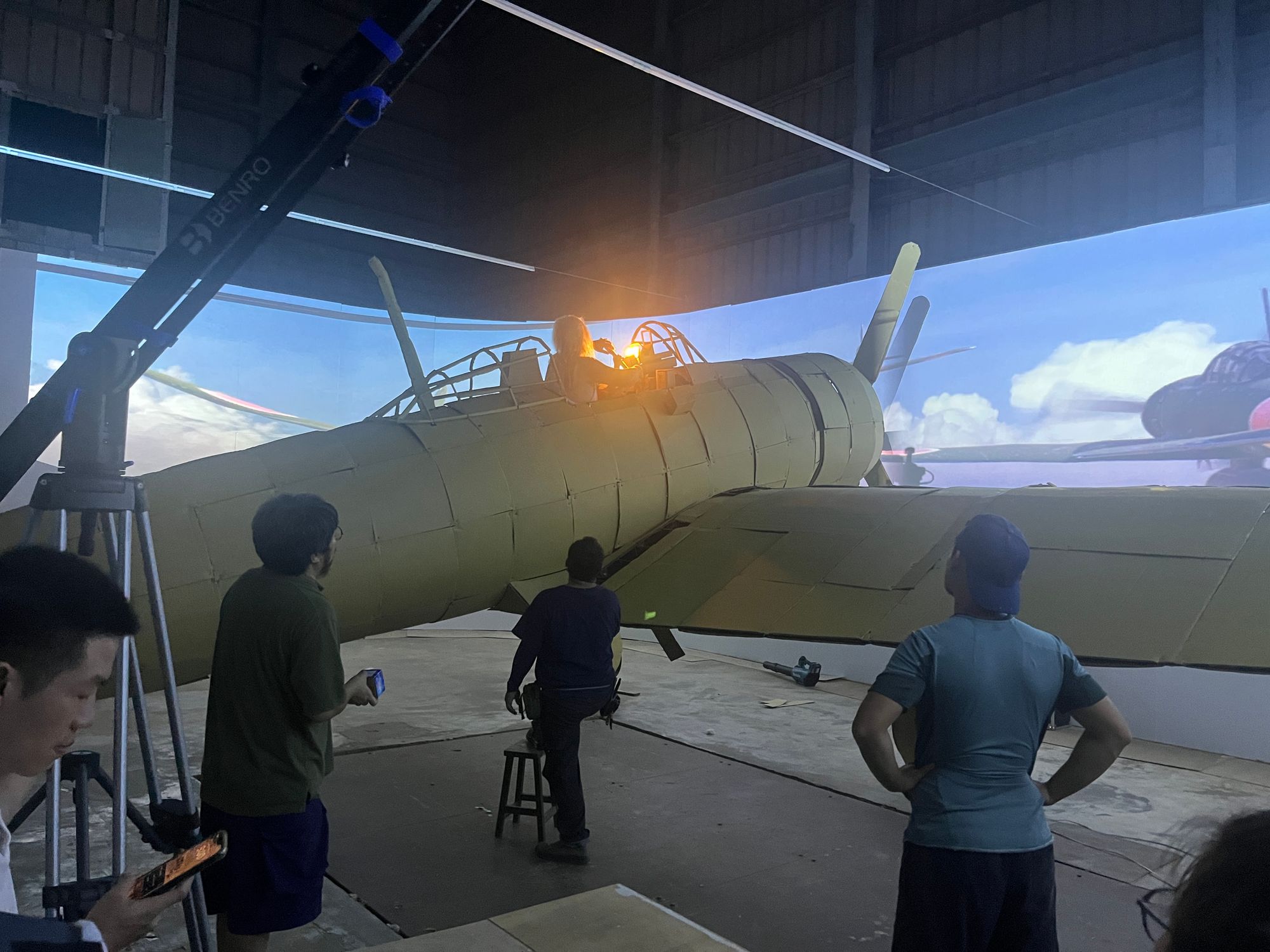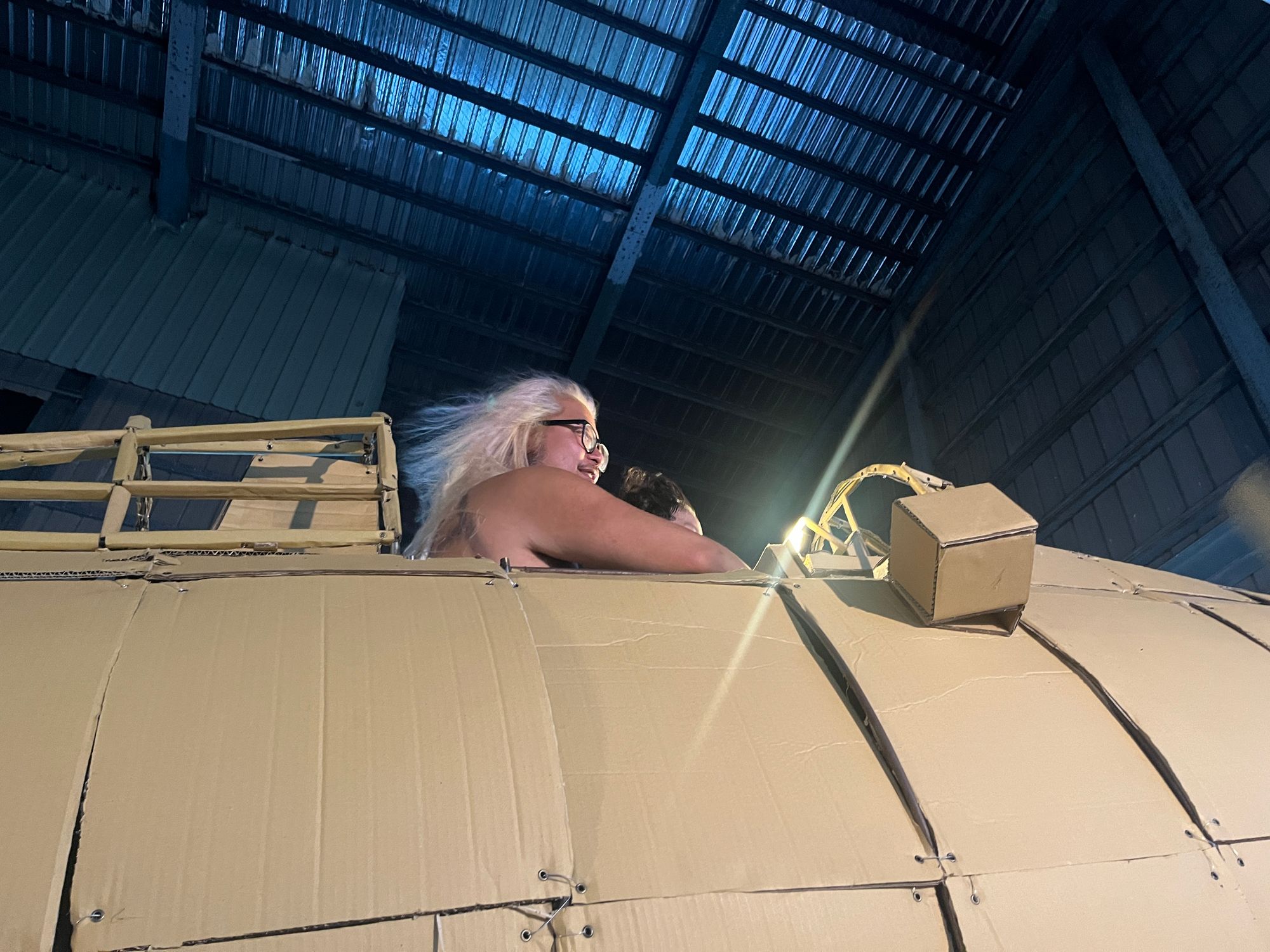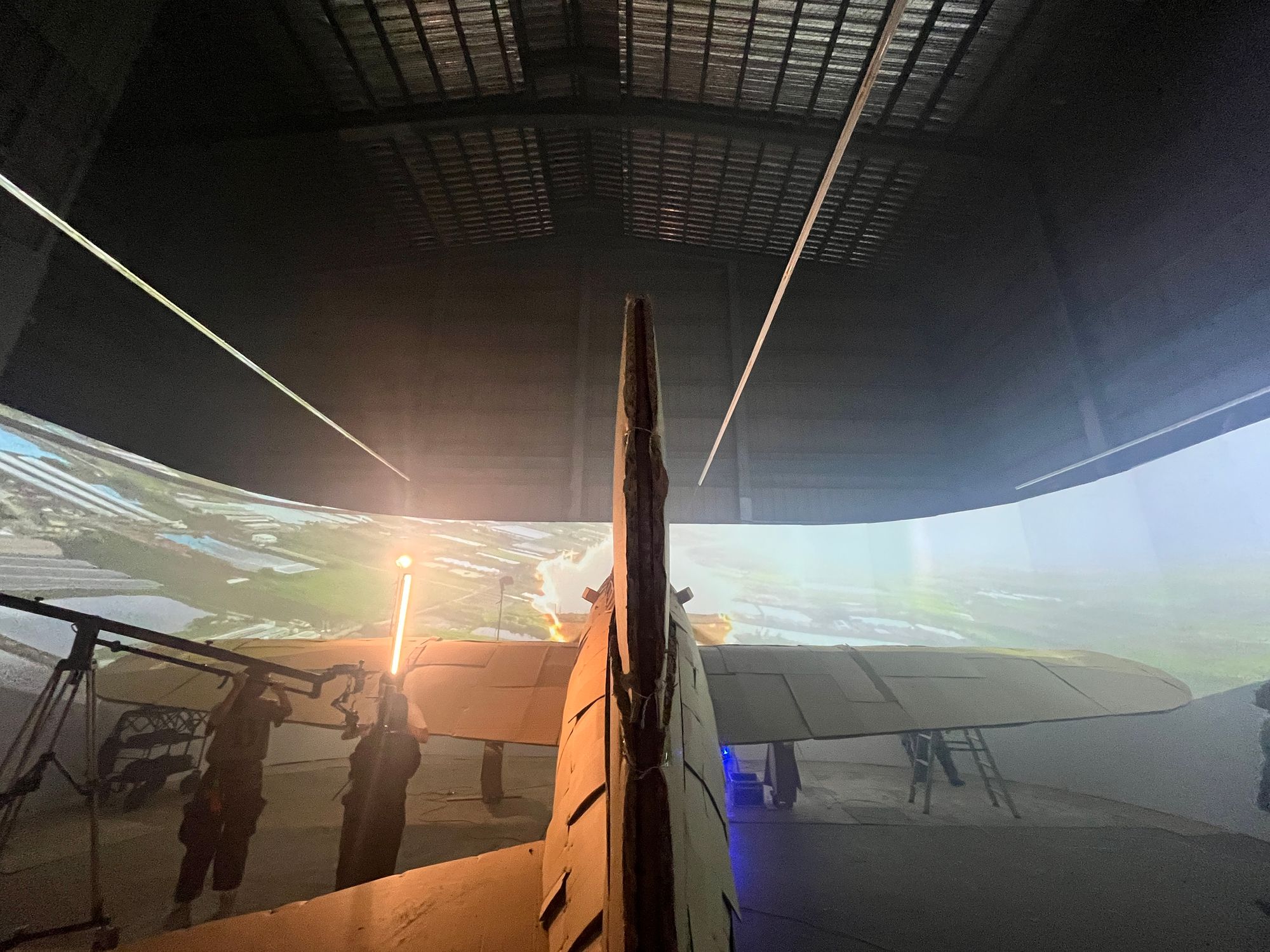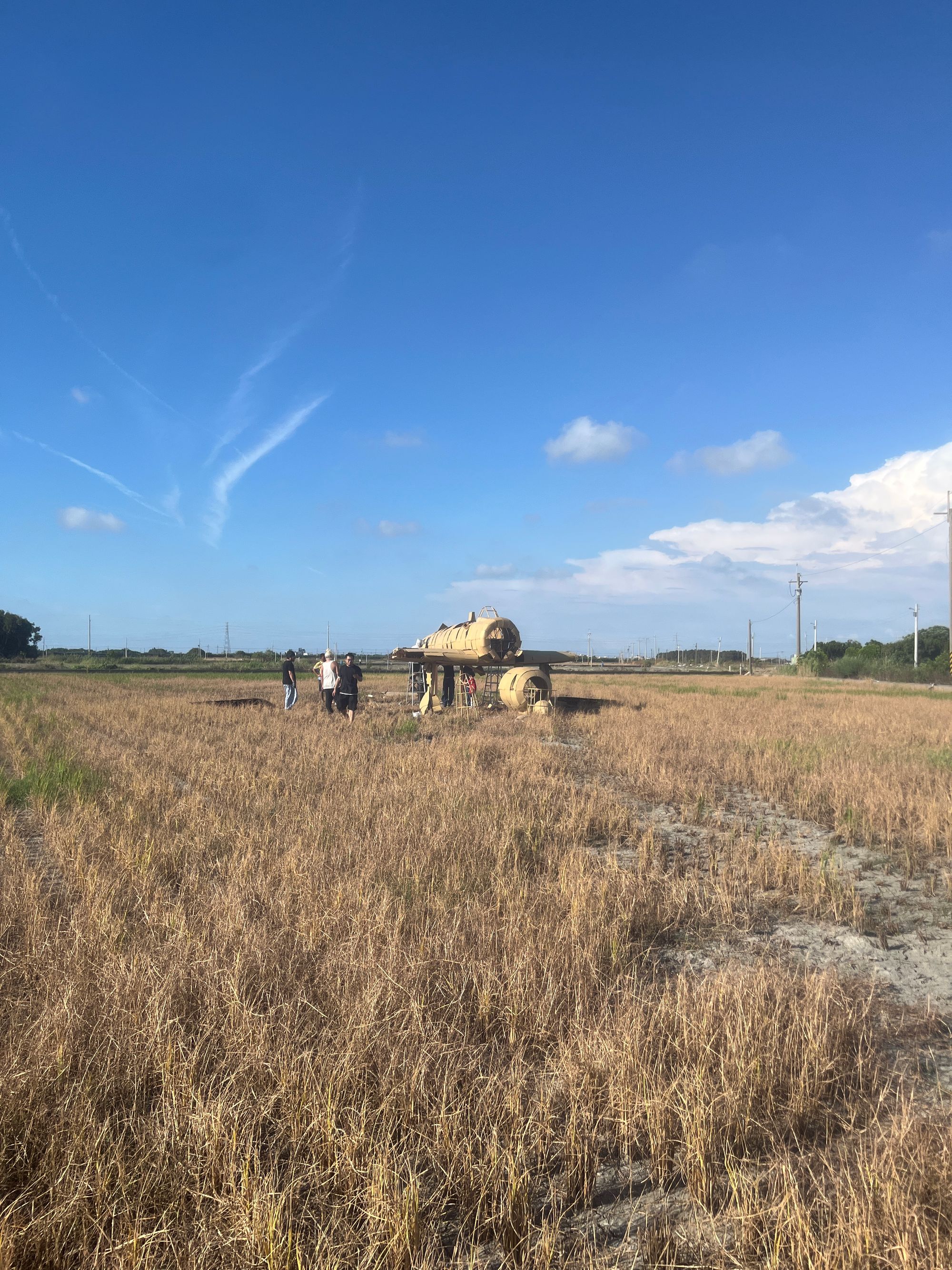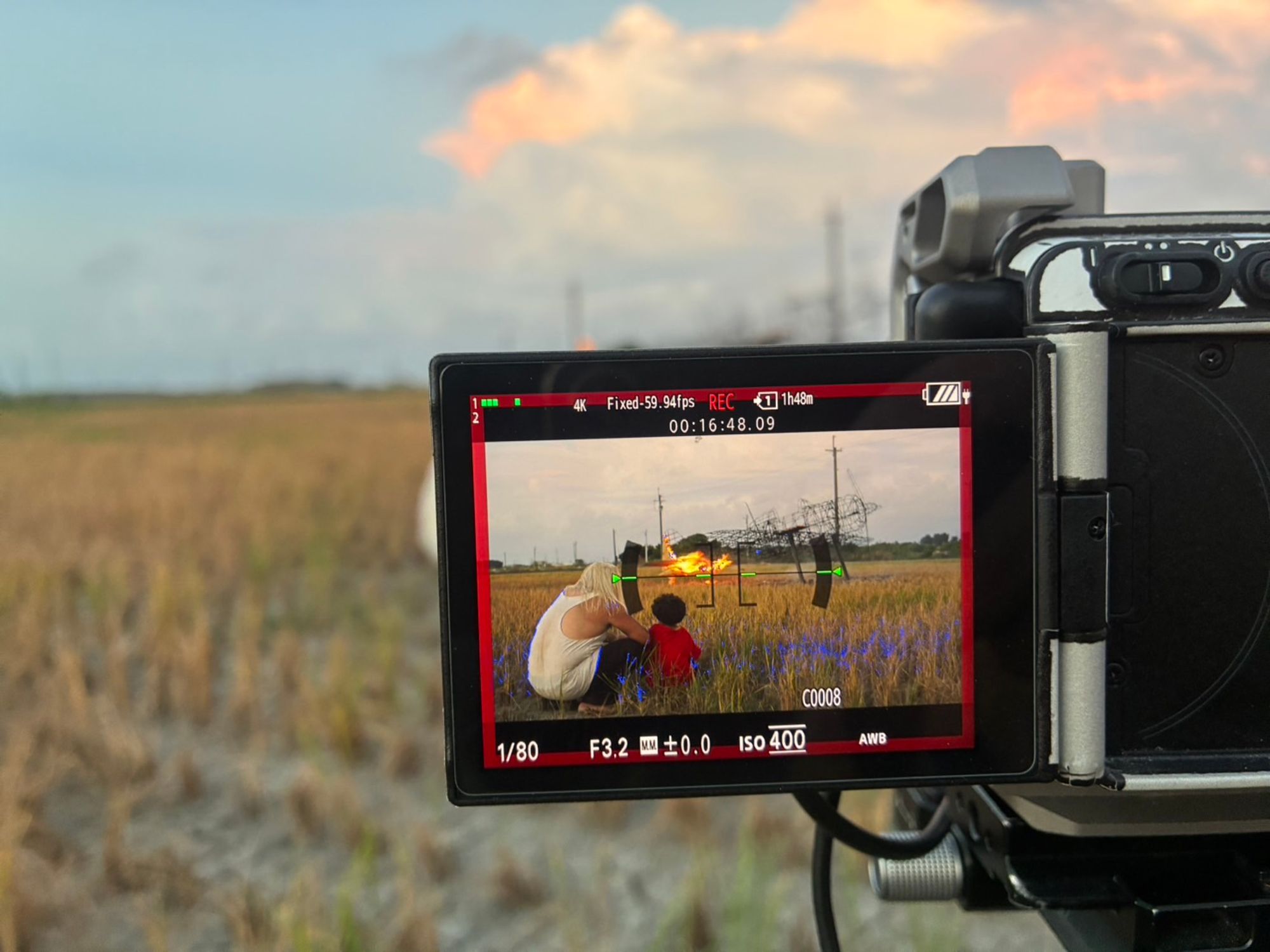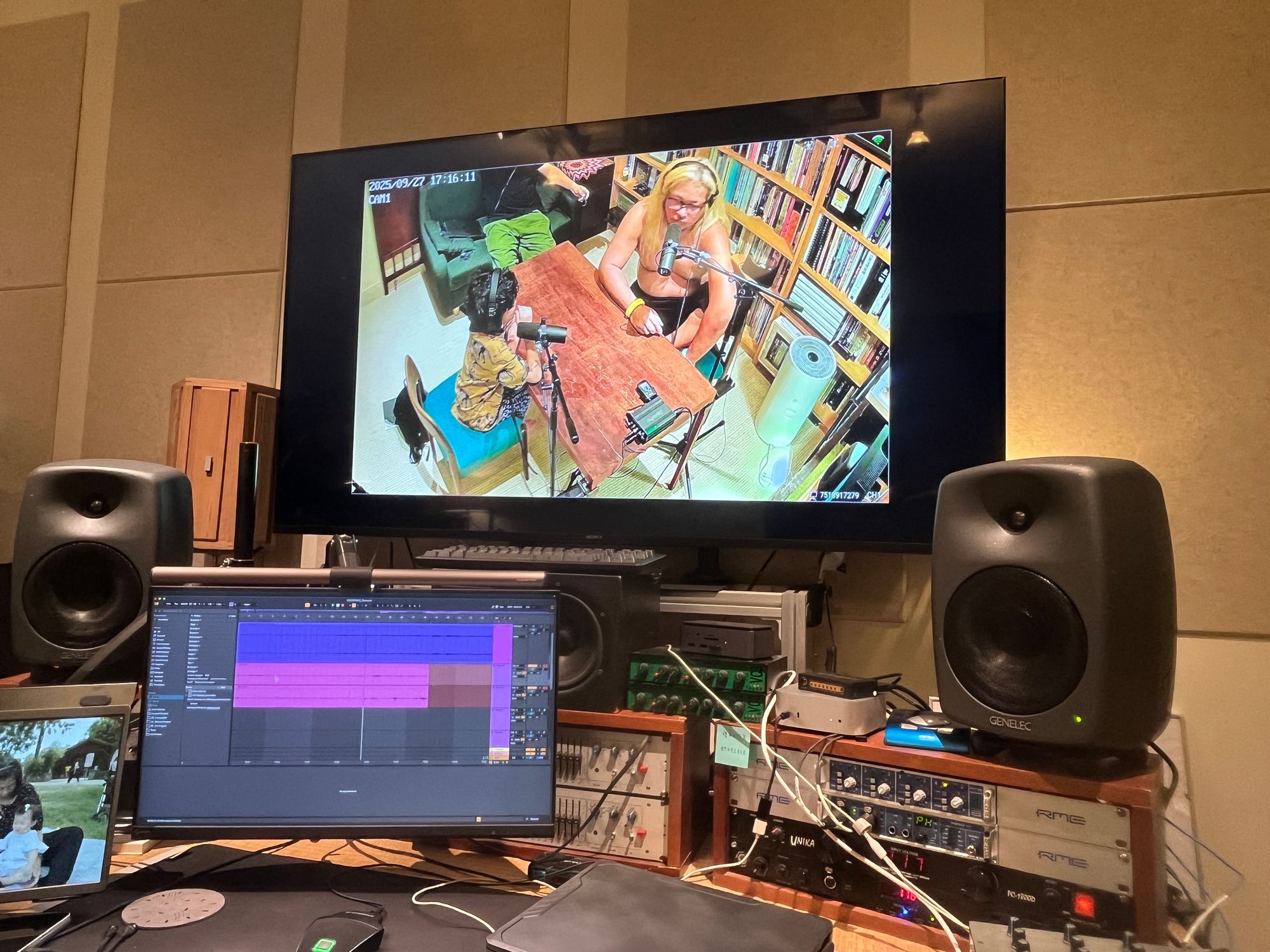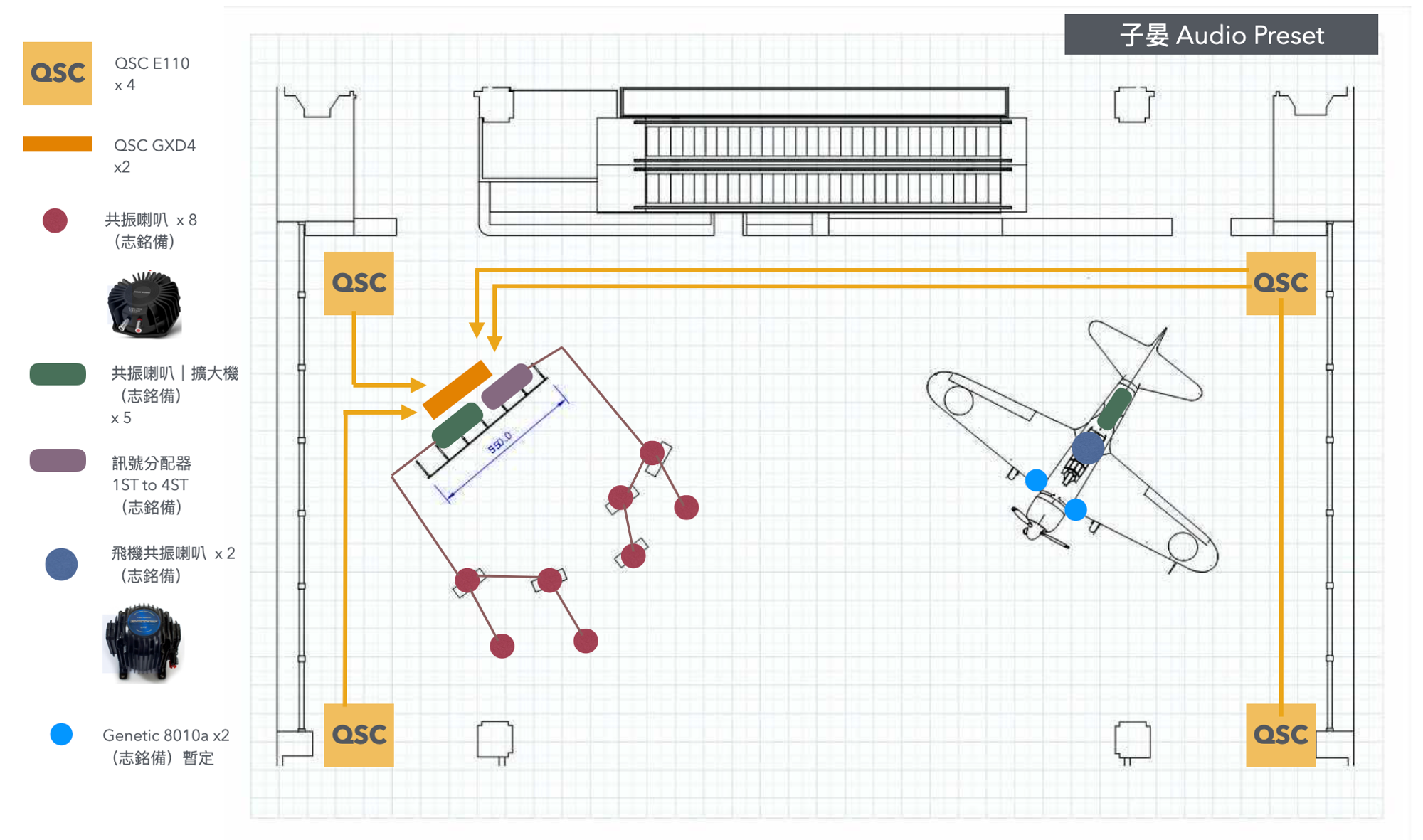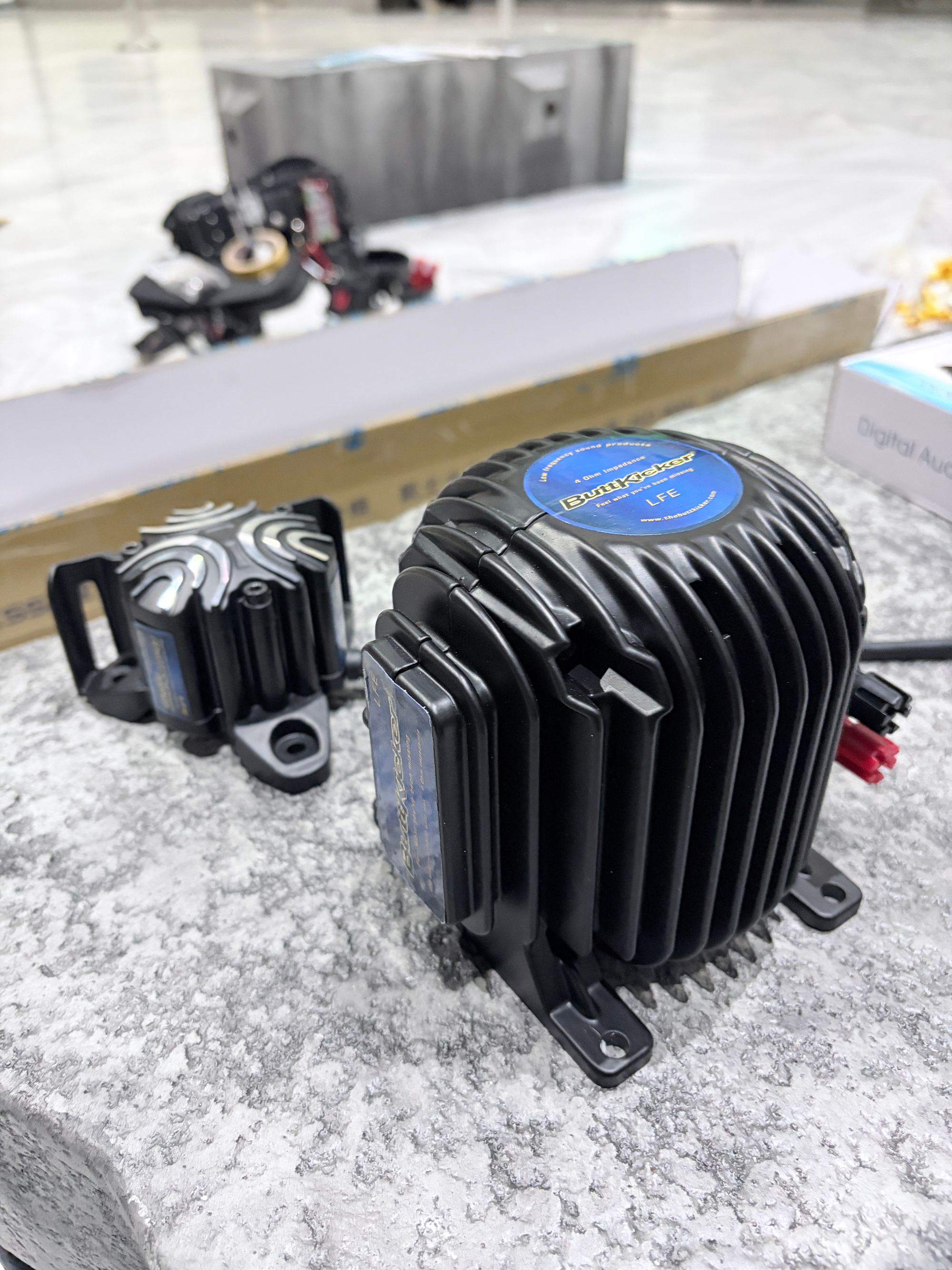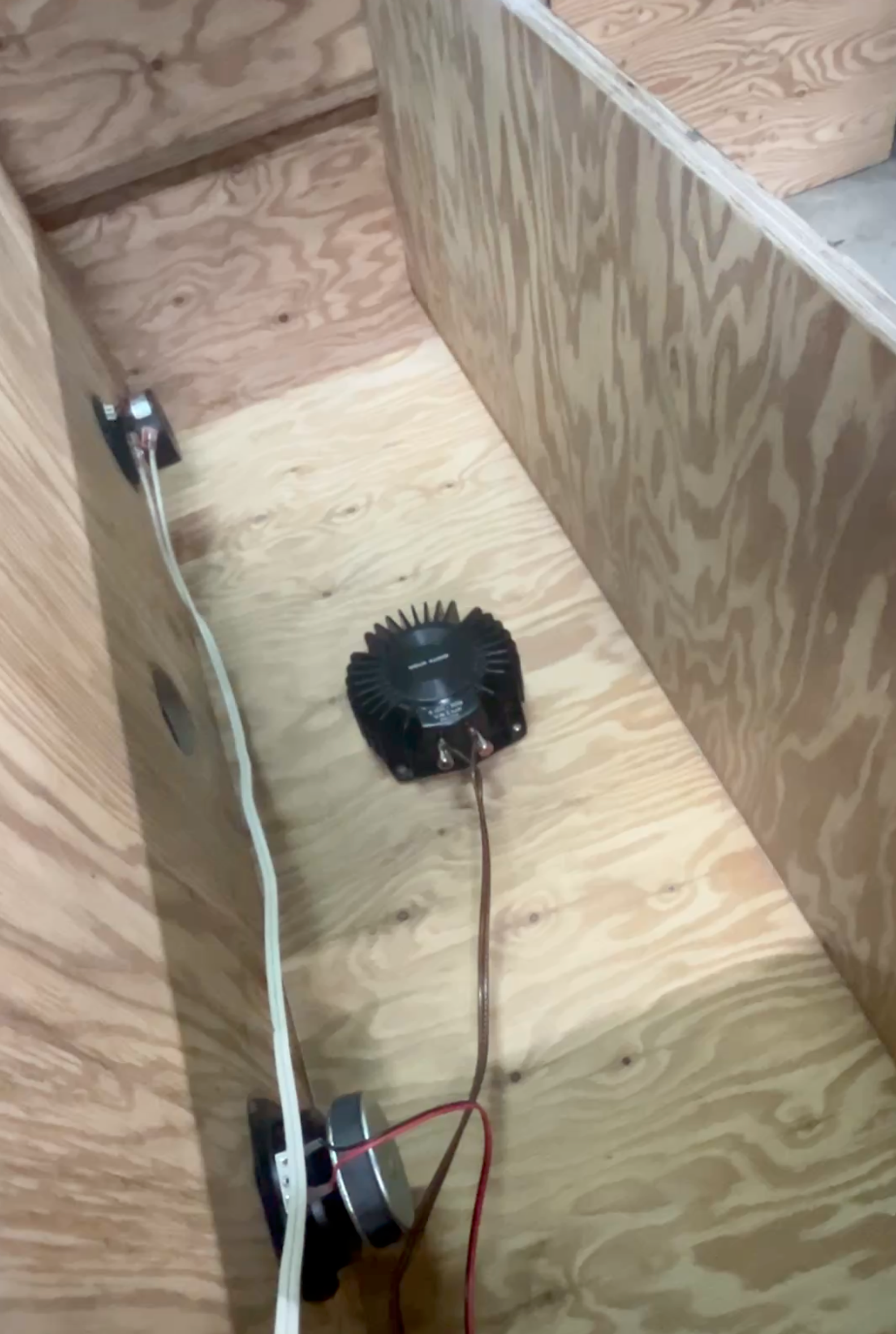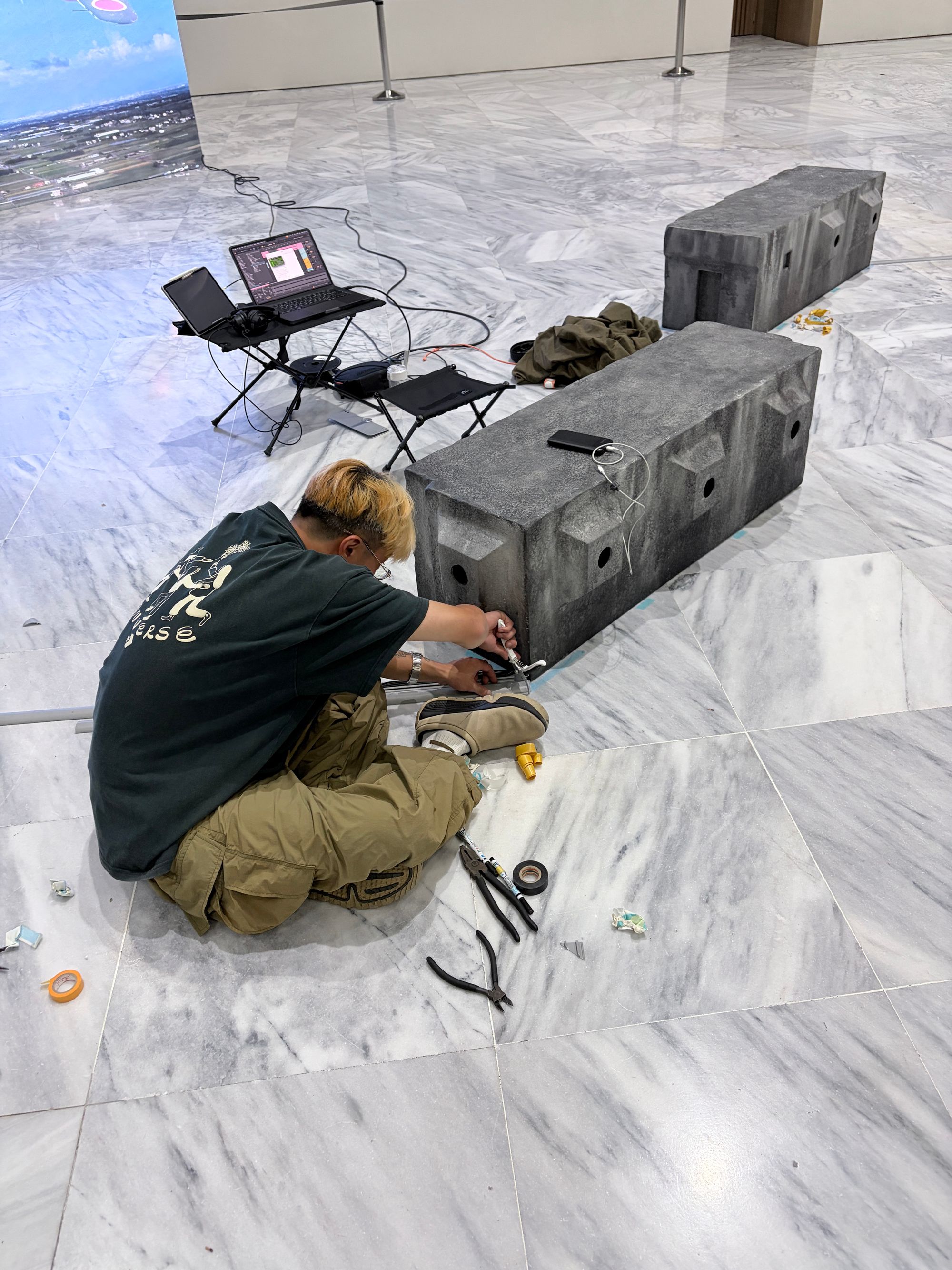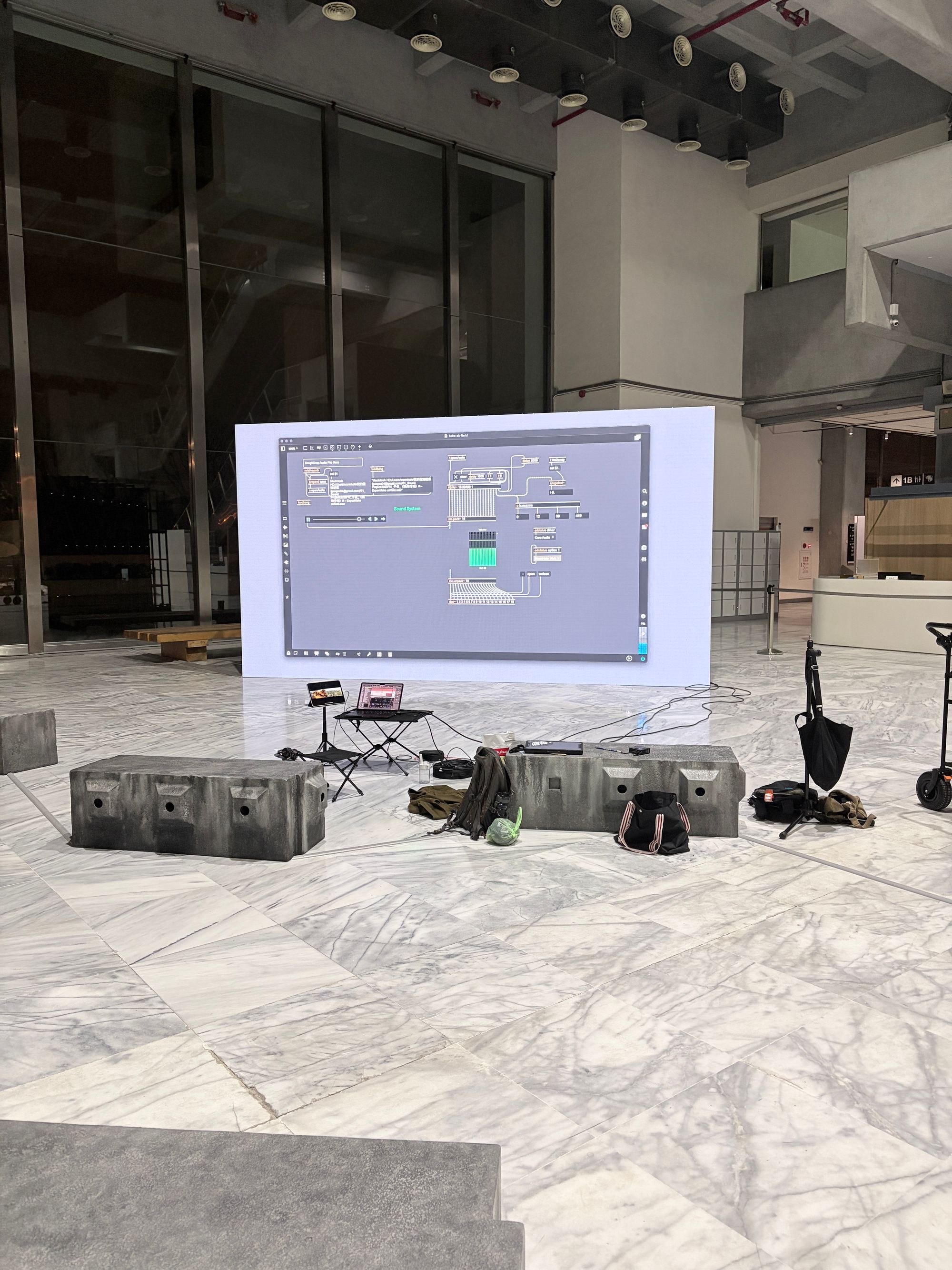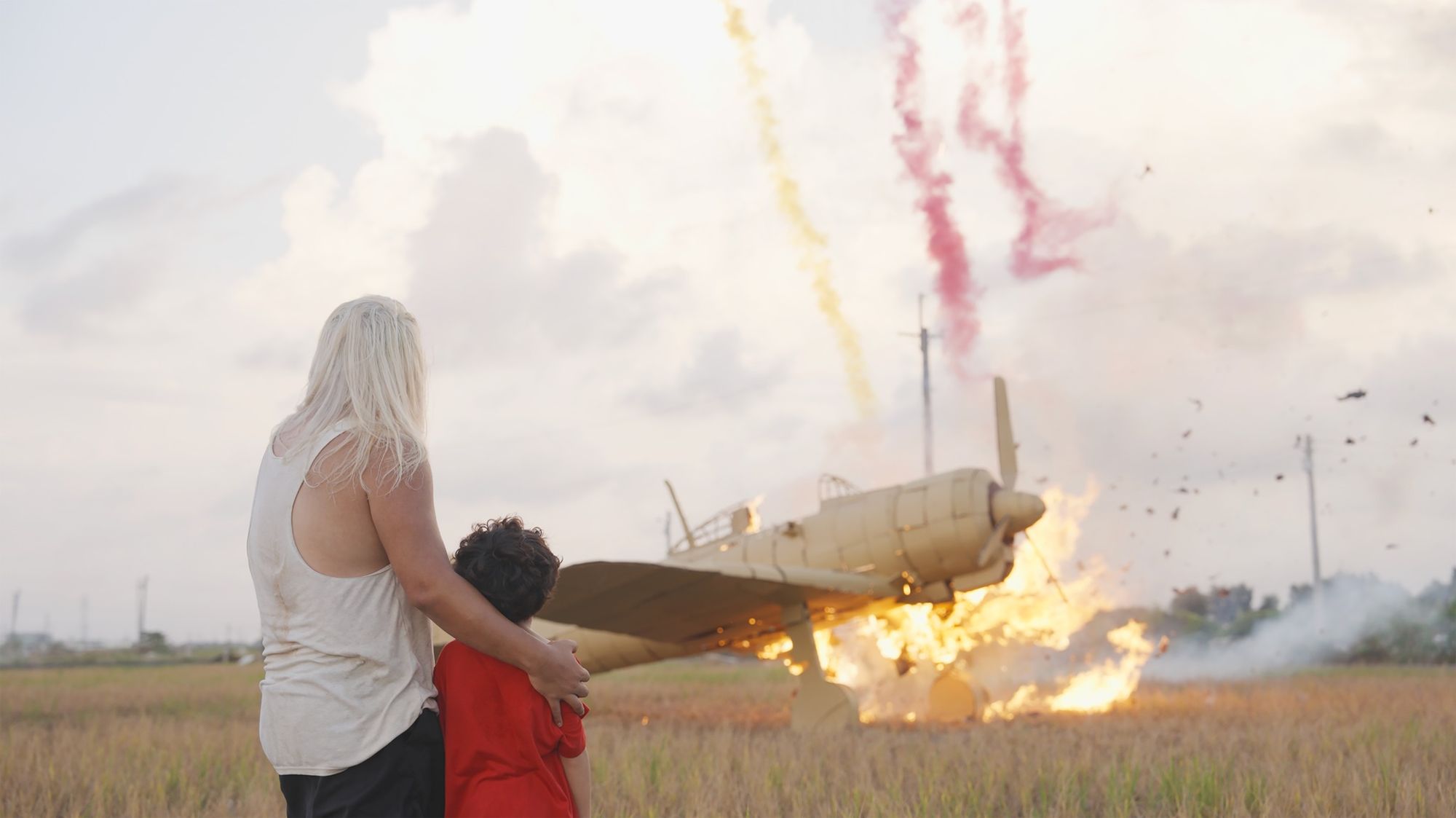
邱子晏的《偽飛行場》作品背景,是從二戰末期日治時期在臺灣水林地區的「誘敵偽飛行場」所設定。從前期規劃就以零式戰鬥機的引擎作為聲音設計的方向,在觀眾的碉堡造型座位底下安裝共振喇叭,模擬零式戰鬥機啟動與飛行時的引擎震動感:用低頻震盪器與零式引擎的混合調變,搭配影像中角色的位置調整震動幅度,對應出引擎的壓縮與空戰的變化過程,形成一種很特殊的聲音與影像融合的體感經驗。這是一件在發想期就參與的聲音設計合作案例。
Ciou Zih-Yan's Fake Airfield takes as its setting the decoy airfields built in Shuilin, Taiwan, in the final years of the Second World War under Japanese rule. From the earliest planning stage, the engine of the Zero fighter set the direction of the sound design. Resonance transducers were installed beneath the bunker-shaped audience seats to recreate the vibration of a Zero's engine as it starts up and flies: a low-frequency oscillator was blended and modulated with the sound of a Zero engine, and the strength of the vibration followed the characters' positions in the image, tracing the engine's compression and the shifting course of aerial combat. The result is a rare, bodily fusion of sound and image. This was a sound design collaboration the studio joined at the work's conception stage.