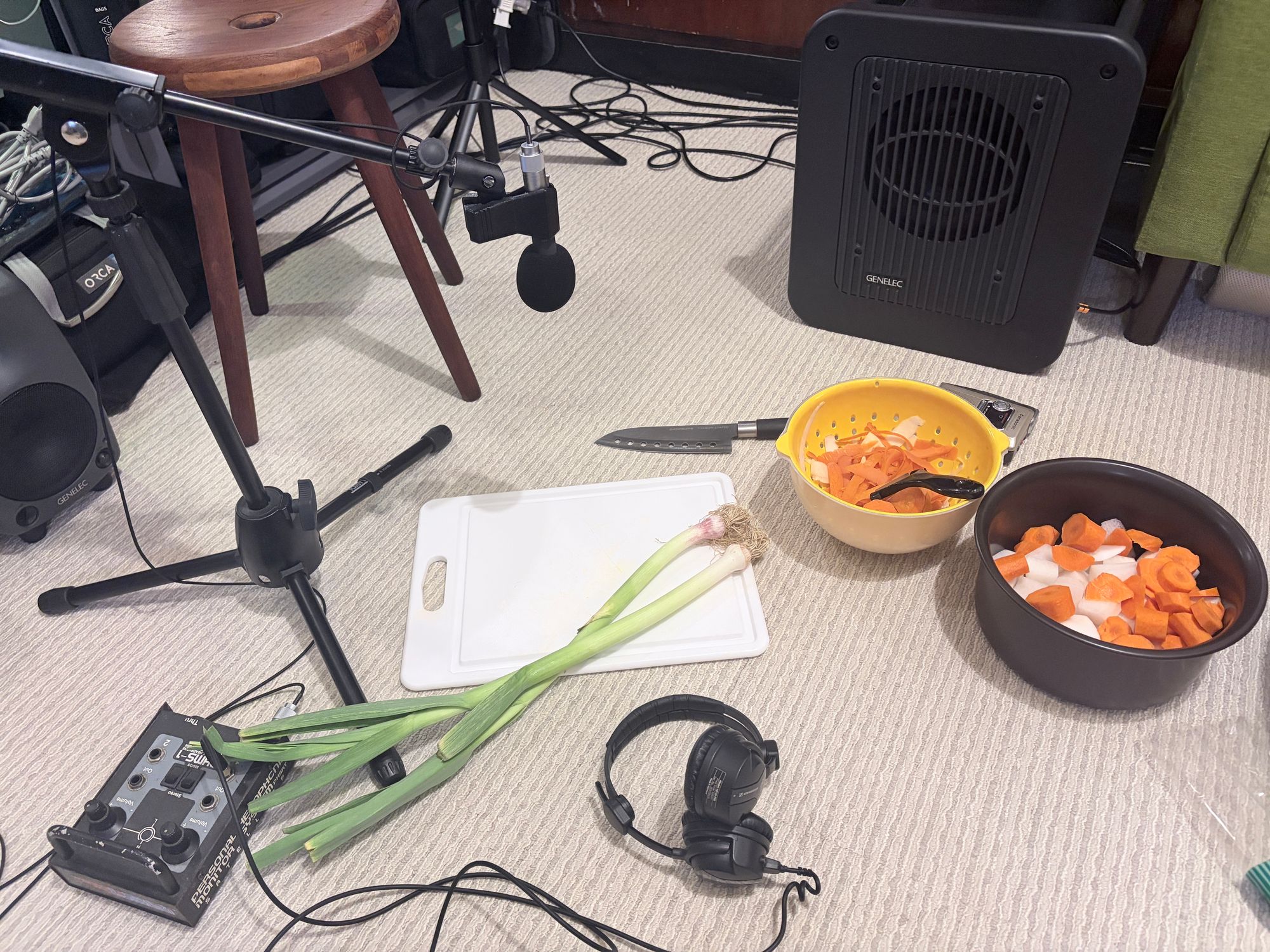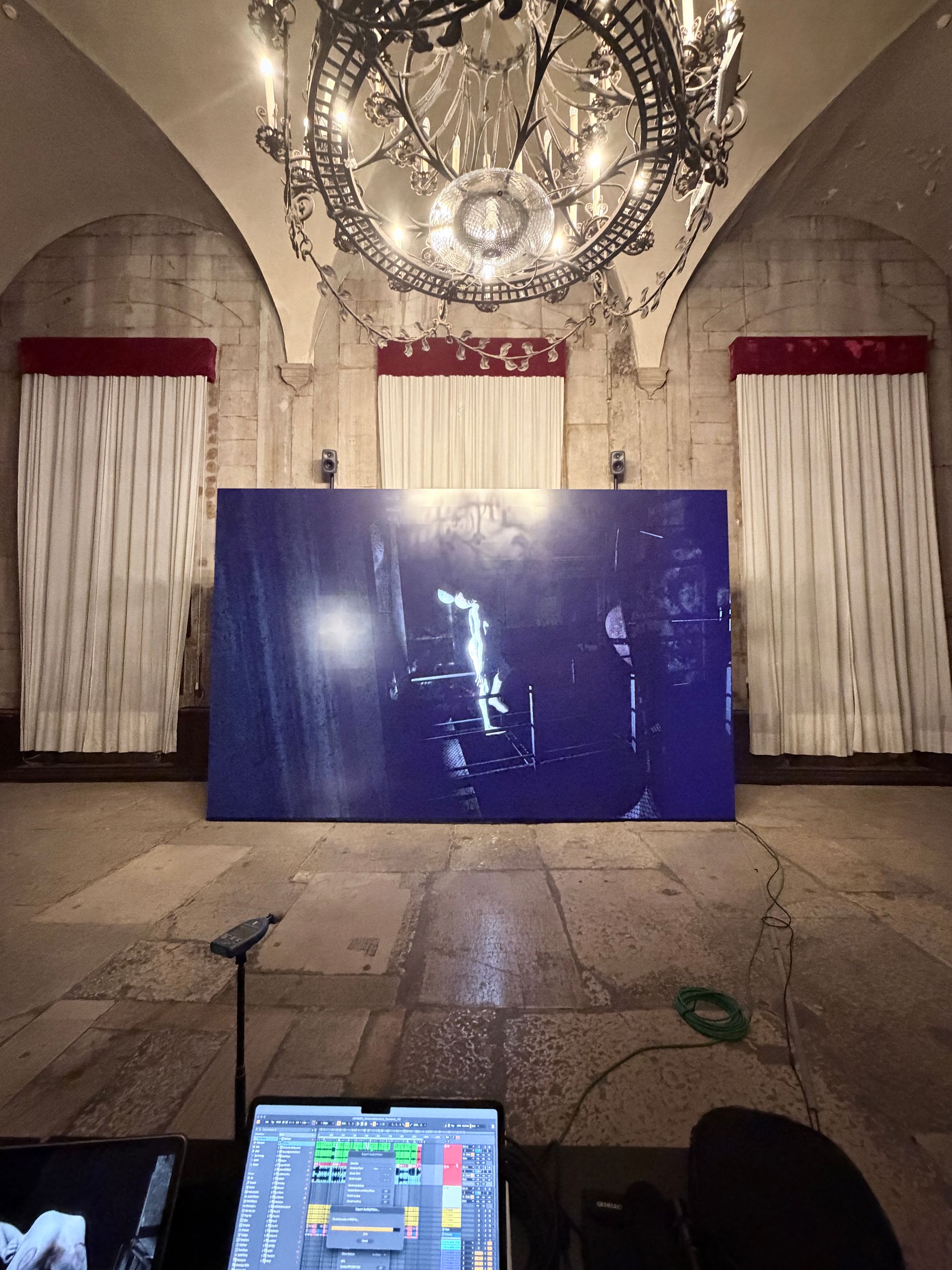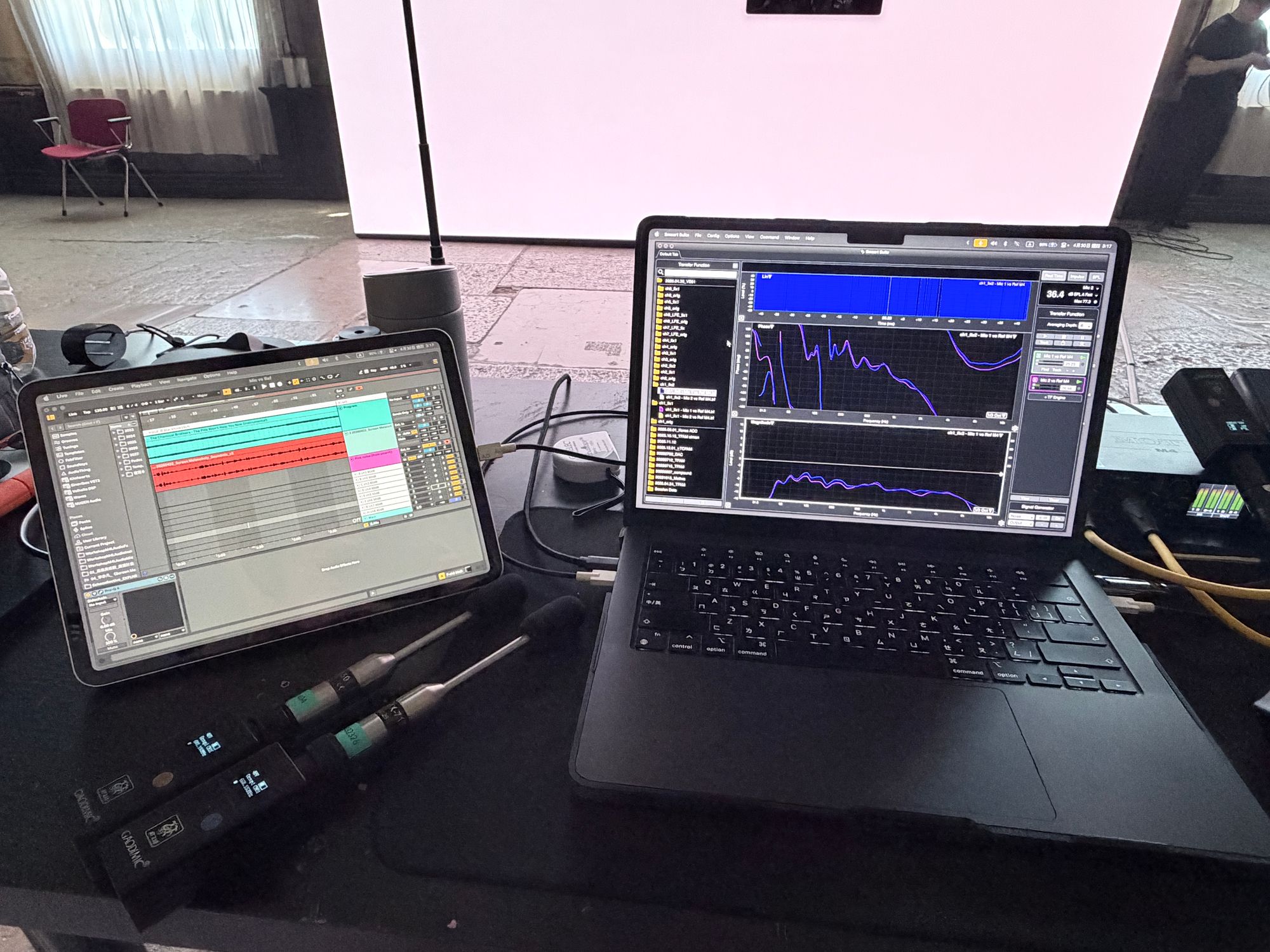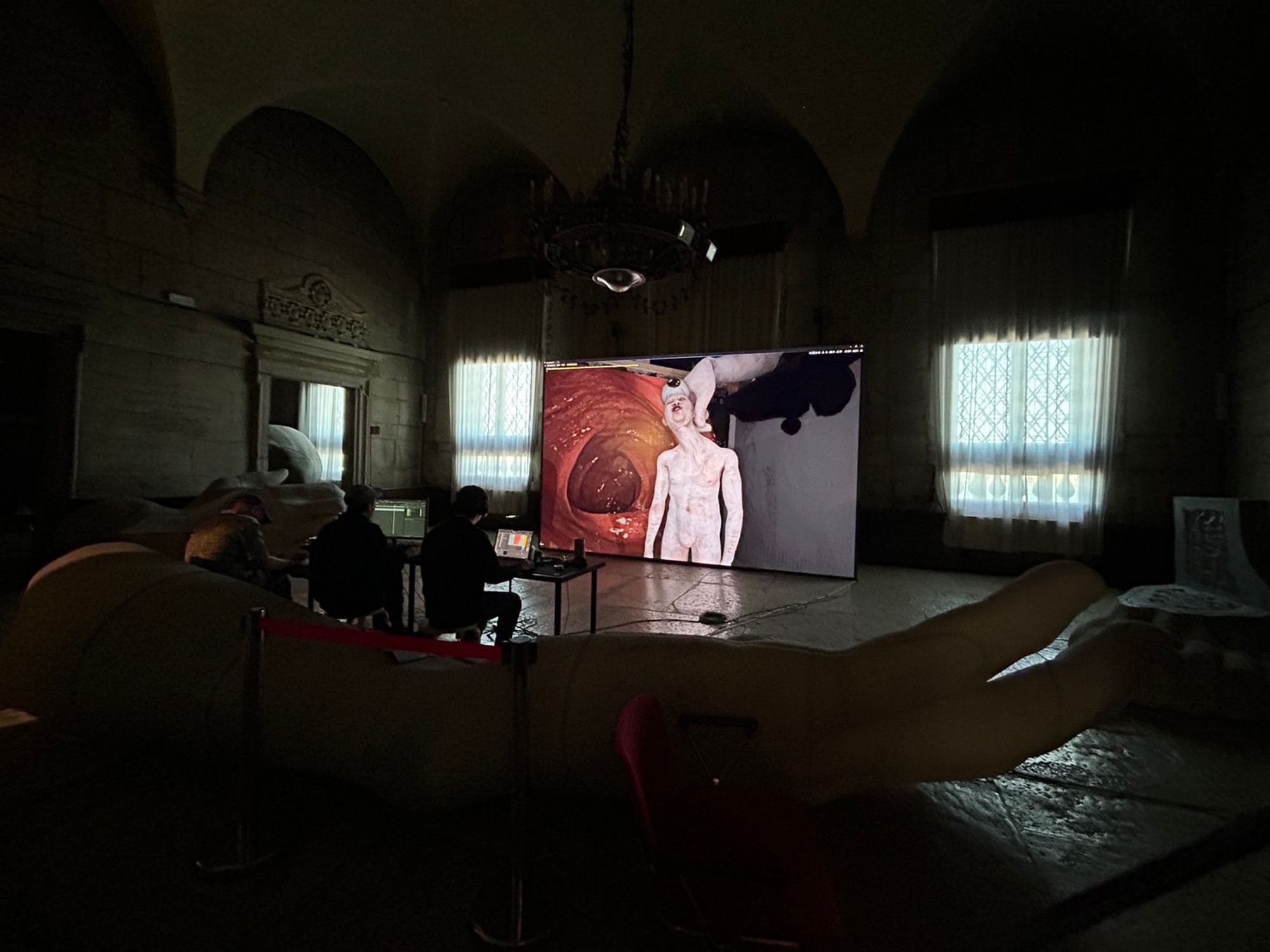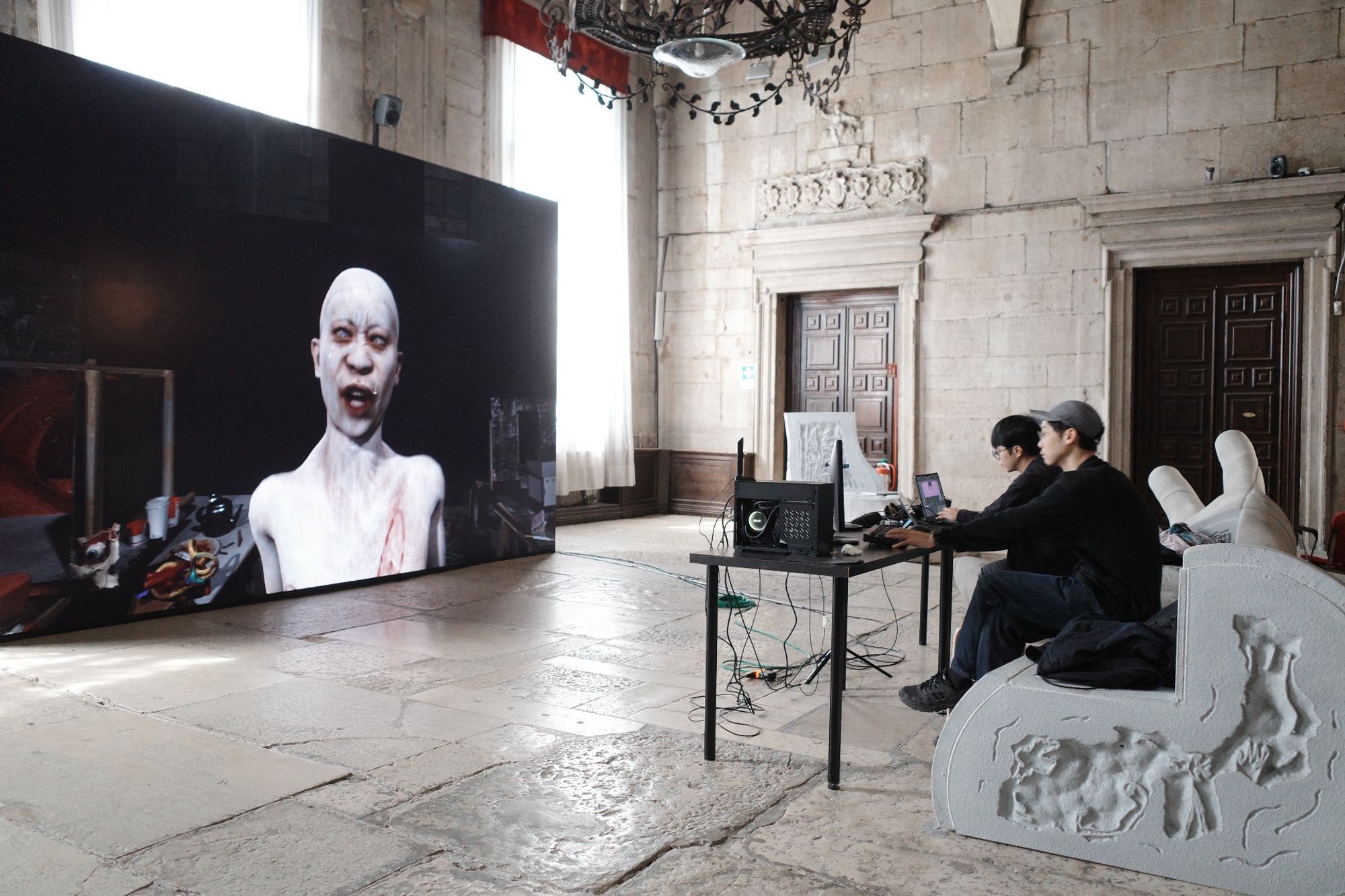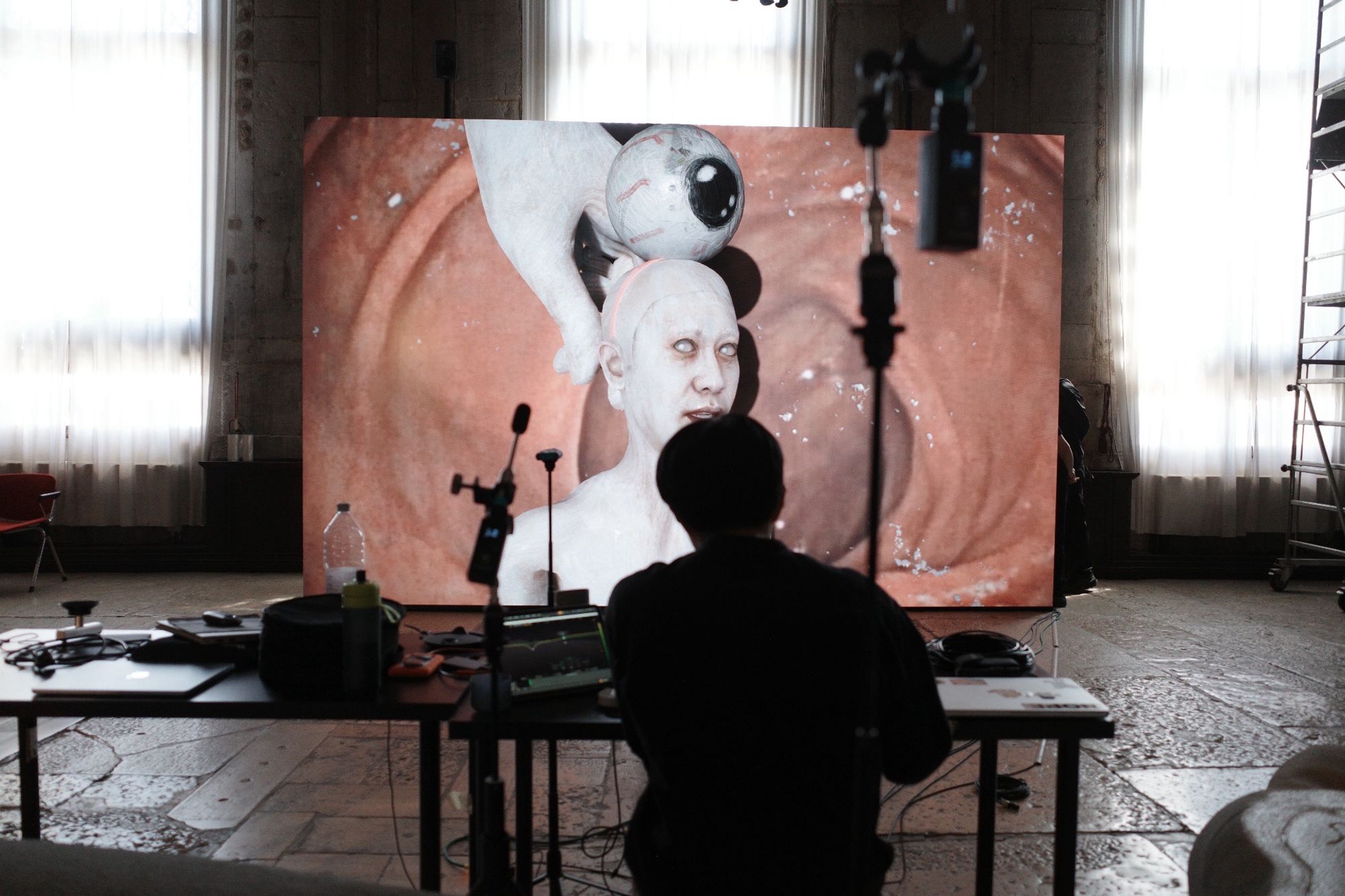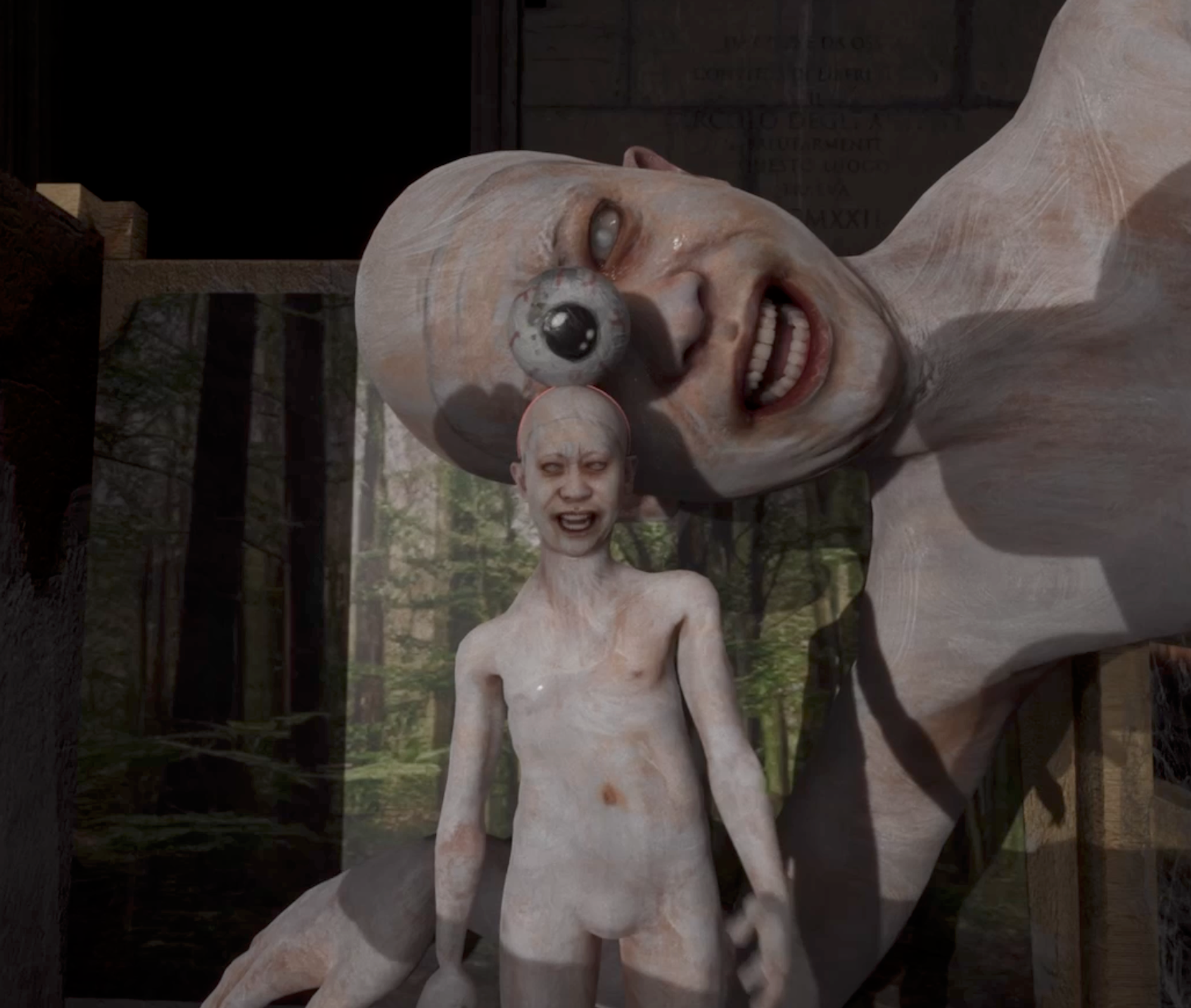
威尼斯雙年展台灣館所在的普里奇歐尼宮(Palazzo delle Prigioni,簡稱普宮),是一座建於 17 世紀(約 1598 年至 1614 年間)的古老監獄建築。這次李亦凡《鬱卒的平面》作品聲音設計中的其中一項設定,是角色如囚徒般穿梭在虛擬與現實之間,配合空間與空間之間切換的過程轉換聲音。工作室錄製普宮的 IR 參數(Impulse Response,脈衝響應,是一種聲學取樣技術,可用來模擬空間殘響與聲音特性等),試著在空間調整中製作出空間無限輪轉的聲音質地,輔以現場 6.2 聲道配置,讓觀眾即使身處現實,仍能體會到影像中如同俄羅斯娃娃般套疊的普宮。
The Taiwan Pavilion at the Venice Biennale is housed in the Palazzo delle Prigioni, a former prison built around 1598–1614. One premise of the sound design for Li Yi-Fan's Screen Melancholy is that its characters move like prisoners between the virtual and the real, the sound shifting as they pass from one space to the next. The studio recorded impulse responses (IRs) of the Palazzo — an acoustic sampling technique that captures a room's reverberation and character — and used them to build a texture in which space seems to turn over endlessly. With a 6.2-channel setup on site, visitors standing in the real building could still sense the Palazzo nested inside the image like a set of Russian dolls.